

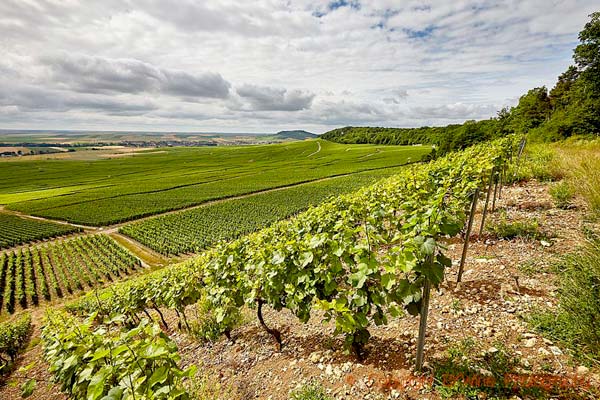
European viticulture stands at a historic crossroads. Faced with an unprecedented decline in global wine consumption and pressured by increasingly extreme climatic anomalies, farms in regions with traditional grape growing are forced to seek urgent alternatives. The three largest producers in the world – France, Spain and Italy – are already implementing radical measures. The monocultural viticultural model, long considered the backbone of the agricultural sector in these places, is giving way to strategies for diversification of agricultural crops and reorientation towards new markets.
In recent years, winegrowers have been uprooting more and more centuries-old vineyards to make room for crops that until recently seemed exotic for their latitudes, but today offer a new chance for economic survival in the conditions of a changing climate.
European fields are charting a concrete future: diversification in farms and the gradual transition are not simply an experiment, but an economic and climatic necessity that is changing forever the landscape of traditional agricultural regions.
The return of the pistachio
In Southern France and Spain, heatwaves threaten traditional vineyards and in response farmers are turning to the pistachio (Pistacia vera) – a crop cultivated in these regions since antiquity, but completely abandoned during the 20th century.
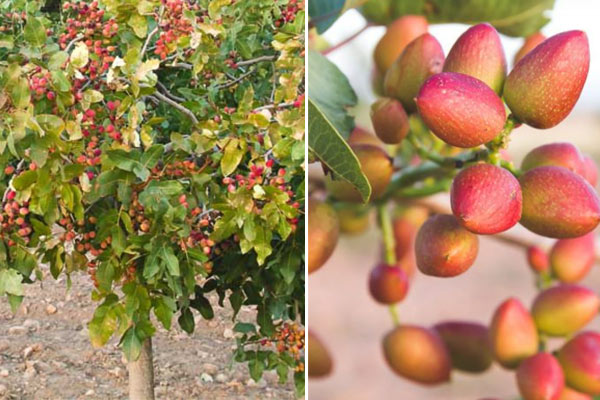
Today the pistachio is experiencing a true renaissance, and the reason lies in its biology. It is a desert plant distinguished by its high tolerance to saline soils. It is also resistant to large temperature fluctuations: from −10 °C in winter to 40 °C in summer. It prefers a sunny exposure and dry soil, does not thrive well in conditions of high humidity, and its root system is predisposed to rotting in winter if it receives too much water that has nowhere to drain. The fruit ripens best during a long and hot summer.
The winegrower Amandine Reynard from the French region of Vaucluse is a clear example of this transition: while her vineyards dry up after the summer heat, the newly planted pistachio trees put out fresh shoots even without any artificial irrigation. However, cultivating it requires specific knowledge. The pistachio is a dioecious plant – it requires strategic planting of male and female trees (in a ratio of 1:10), and pollination is carried out entirely by the wind, which makes the air currents in the Rhone valley ideal.
Spain is also following this trend. After losing over 100,000 hectares of vineyards in 15 years, farmers in La Mancha and Andalusia are transitioning en masse to nuts. The main economic stake, however, is time: the trees begin to bear fruit only after the 5th year, and enter full bearing after the 10th, which requires long-term financial planning.
The salvation of Bordeaux: Kiwi
While in the south the problem is drought, in Southwestern France (the Bordeaux area) the crisis is caused by the collapse in exports of red wines and the loss of traditional markets. There, winegrowers such as Cécile de Taffin from „Château l'Ensumiz“ are reducing their vineyards to invest in kiwi plantations (Actinidia deliciosa).
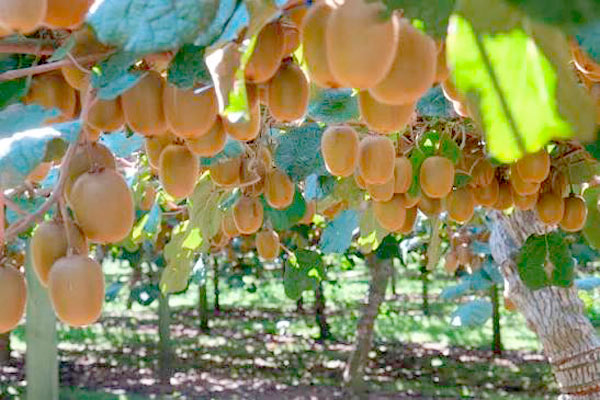
Unlike the pistachio, the kiwi is a moisture-loving vine that offers high profitability and an opportunity for the domestic market, but comes with uncompromising agronomic requirements. It needs abundant irrigation and massive support structures (pergolas) to bear the weight of the fruit and leaf mass – often over 30-40 tonnes per hectare. The crop is extremely sensitive to late spring frosts (the buds perish at -1.5°C) and requires active bee pollination. Despite the high initial investment and the risk of bacterioses, the kiwi provides financial stability unattainable today for traditional winegrowing farms.
Lentils: An elixir for the soil
Another extremely popular alternative among French winegrowers is legumes. The lentil (Lens culinaris) is proving to be the perfect choice for farmers in the Gard department.
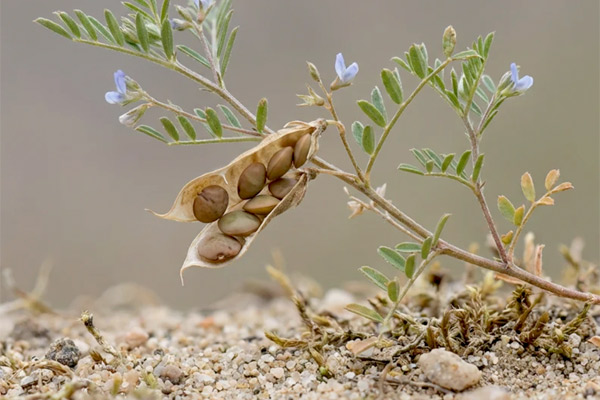
It is cold-loving at the beginning of its development (the seeds germinate at 4-5°C), but subsequently becomes extremely drought-resistant. Its true value, however, is underground. In symbiosis with nodule bacteria, the lentil fixes atmospheric nitrogen, enriching the soil naturally. This makes it a perfect predecessor for other plants such as lavender.
Its cultivation is fully mechanized, but it is not without challenges. Due to its low height, the lentil is a weak competitor to weeds, and uneven ripening requires mastery at harvest. In order to guarantee security and build new markets, farmers are already uniting in cooperatives and concluding direct contracts with state institutions and public canteens.
Italy: Technological adaptation and "green harvest"
Italy approaches uprooting more conservatively, focusing on innovation. In Sicily, Apulia and Veneto, there is a mass transition to night harvesting with floodlights, in order to avoid the 40-degree daytime heat and premature fermentation.
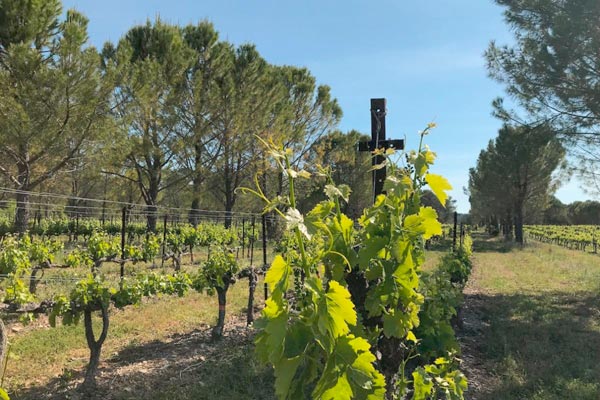
Instead of destroying vineyards, Italians are introducing voluntary yield reduction through "green pruning" (which includes a number of operations such as shoot thinning, topping, suckering, leaf removal, cluster and leaf thinning, etc.), and scientists are experimenting with agroforestry – creating vineyards in partially wooded areas where trees provide natural shade and retain moisture.
- France: Through FranceAgriMer, EUR 4,000 per hectare is granted solely for the final uprooting of vineyards.
- Italy: The country co-finances (50%–75%) the modernization of vineyards with support of up to EUR 4,000–6,000 per hectare for new resistant varieties.
The Bulgarian reality: A struggle for survival and evolution in quality
While farmers in Western Europe receive various compensations for crop diversification, viticulture in Bulgaria is struggling to preserve existing areas. Statistics report a drastic contraction – harvested areas are declining by over 5% annually to the critical 26,000 hectares.
Winegrowers in the country are pressured by a lack of subsidies (an expected halt of restructuring payments in 2027) and zero intake for compensation under "green harvest". Added to this is the climatic pressure – extreme temperatures that create an ideal environment for diseases such as phytoplasma (transmitted by the grape leafhopper). The only functioning targeted support at the moment is the aid for compensating costs for plant protection products (against pests such as the grape leafhopper, which transmits phytoplasma). Its total budget is just over EUR 2.5 million, and the maximum rate is only up to EUR 306.77 per hectare. Documents under it are accepted until 13 November 2026.
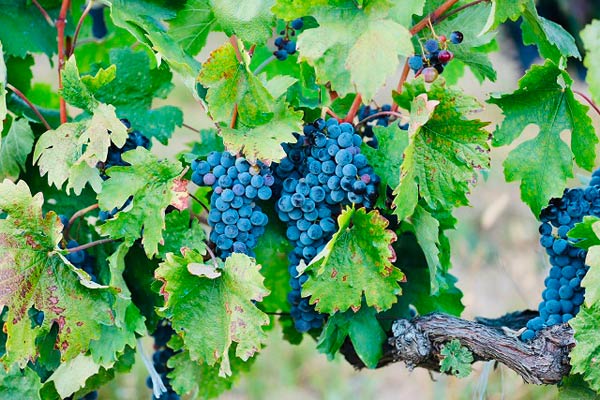
The Mavrud variety is a local Bulgarian red wine grape variety. It has been known since deep antiquity and is one of the autochthonous varieties cultivated on the largest areas in the country, mainly in Southern Bulgaria. Mavrud is a late-ripening red wine variety that is a typically wine variety, with a high percentage of solid fraction in the berries. This is a prerequisite for obtaining wines rich in phenolic substances and extract.
Despite the general contraction of the sector, however, Bulgarian winemaking is finding its way to new markets through qualitative evolution. Investments in the Struma Valley, the Thracian Lowland and the Black Sea coast are directed towards boutique wines. Modern winemakers are increasingly confidently betting on characteristic local varieties – Shiroka Melnishka Loza, Mavrud, Rubin and Gamza – creating a unique identity that allows domestic wine to withstand the global storm.